
Manteca City Directory Years on Record
The most reliable local chronology comes from a city-hosted environmental investigation that documented address sources used along West Yosemite Avenue. It proves editions consulted for that investigation. Catalog records add other located editions, but neither source should be stretched into a claim that a library owns a complete run.
| Collection | Verified years | Where to verify | Access note |
|---|---|---|---|
| Polk's City Directory | 1968 | City-hosted investigation; library catalog | Confirm the physical volume |
| Haines Criss-Cross Directories | 1971, 1974, 1977, 1981, 1985 | City-hosted investigation | Street-order evidence; verify shelf access |
| Directory evidence, publisher unclear | 1992, 1995, 2000 | City-hosted investigation | Underlying edition and holder need confirmation |
| Cole Information | 2005, 2010, 2014, 2017 | City-hosted investigation | Report proves use; access varies |
| EDR Digital Archive | 2020 | City-hosted investigation | Digital source cited for the address ladder |
| Dedicated Polk's Manteca title | 1968, 1970, 1976, 1978, 1979, 1981, 1983 | Genealogy catalogs and images | Check FamilySearch or library access |
| Polk-Husted countywide volumes | 1913, 1924, 1937 | Genealogy catalogs | Look for the Manteca subsection |
Years are not evenly spaced. A missing year may reflect a gap in publication, a publisher change, a cataloging difference, or a source that has not yet been located. Treat the verified ladder as a research plan, not as a promise of continuous coverage.
Open the city-hosted address investigation when a year needs to be traced to its original citation.
The Manteca Directory Shelf Has Gaps
The official library pages located during research did not publish an exhaustive shelf list with every Manteca directory publisher and year. That is a useful limitation, not a reason to stop. Search the Stockton-San Joaquin County Public Library catalog under Manteca, Stockton, San Joaquin County, Polk, telephone directory, yearbook, obituary index, and newspaper. A countywide title may contain a Manteca section even when Manteca is absent from the catalog title.
Ask staff to distinguish circulating books, reference-only volumes, microfilm, digitized images, and licensed genealogy databases. Ask directly whether a reverse or criss-cross volume is available. Those books arrange names by street and number, which makes them more useful for an old address than a surname-only index.
The Stockton-San Joaquin County Public Library system includes Manteca branches and the deeper countywide catalog. Local-history help may point to newspapers, school yearbooks, obituary indexes, or a volume held outside the branch. The Manteca branch's own history adds context: it began in 1910, moved through temporary sites, opened a permanent building dedicated January 13, 1962, and expanded in 1977.
The library system page is the practical starting point for catalog searches and a staff question about a missing Manteca city directory year.
How a Manteca City Directory Entry Reads
A city directory entry is a compact clue set. Publisher abbreviations vary, so photograph or transcribe the key before interpreting a mark. A typical entry may show a surname and given name, a spouse in parentheses, an occupation, employer, home address, business address, and a cross-reference. Some volumes distinguish a person who resides at a place from the householder. Do not assume a code from one year means the same thing in another.
| Name | Surname and given name, with spouse or former-name clues when printed |
|---|---|
| Work | Occupation and sometimes employer or business address |
| Home | House number and street, often marked with a residence or householder abbreviation |
| Family clue | Spouse in parentheses, widow notation, or a cross-reference |
| Street section | Reverse or criss-cross arrangement by street and number |
- Criss-cross directory
- A reverse section arranged by street and number rather than only by surname.
- Householder index
- A name or address aid that identifies the person treated as the household head in that volume.
- Abbreviation key
- The publisher's legend for marks such as residence, householder, widow, or cross-reference.
- Entry
- A publication-year statement, not a guarantee that every person at the address was listed.
The entry can establish a published name, address, occupation, or relationship clue. It cannot by itself prove a legal relationship, ownership, exact move date, or current connection.
Why Cowell Station Matters in Manteca Directories
Manteca incorporated on May 28, 1918, but the settlement grew from a railroad and agricultural place known as Powell's Station and then Cowell's Station. Early residents may therefore appear under rural San Joaquin County, township and range, ranch, school district, subdivision, or station terms rather than the modern city label. Those variants are search keys, not just local color.
The county's property trail reaches back to 1851, while the city and its later street grid came afterward. A genealogy search that starts with a modern Manteca street can miss an earlier entry that used a rural route or a land description. Search neighboring households, employers, school districts, and place variants when a name does not appear under Manteca.
South San Joaquin Irrigation District formed in 1909 and first delivered water in 1913. Railroad, irrigation, food-processing, dairy, and agricultural records can place a household in a time and community even when a printed volume is missing. The names “watermelon capital,” “sugar beet town,” “tomatoville,” “sunflower center,” and “dairy center of California” can also serve as newspaper and catalog keywords.
Note: Pre-incorporation directory work should test rural and station terms before treating a modern city-name miss as absence.
Manteca Historical Directory Backstops
The California State Library California History collection holds directories, maps, newspapers, manuscripts, photographs, and local histories. The San Joaquin County Historical Society and Museum adds county family, agricultural, organizational, and image context. The Manteca Historical Society museum reports documents and thousands of photographs, with public hours and a private research contact at (209) 825-3021.
FamilySearch's catalog should be searched by the place hierarchy United States, California, San Joaquin for deeds, probate, vital records, and church materials. Some images may be available only at a FamilySearch Center or affiliate library. The National Archives at San Francisco is a regional route for federal census, immigration, naturalization, and military records.
These repositories do not replace the library catalog. They fill different gaps. A State Library map can explain a place label. A county museum photograph can identify an organization or building. A census schedule can provide a household at an enumeration date. A Manteca city directory supplies a publication-year address clue.
Open the State Library collection page to start a statewide catalog search.
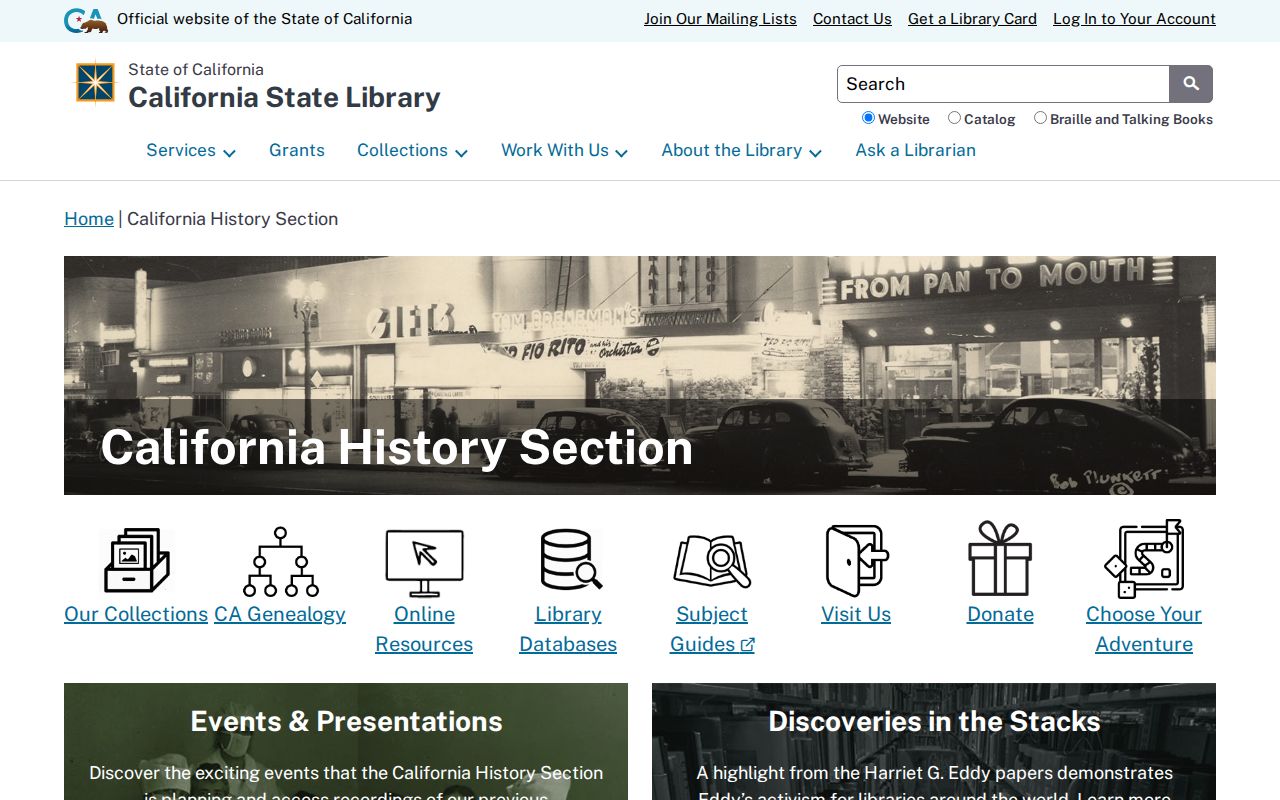
The State Library image shows a broader history collection that can bridge a local directory gap.
Open the National Archives at San Francisco for federal record paths.
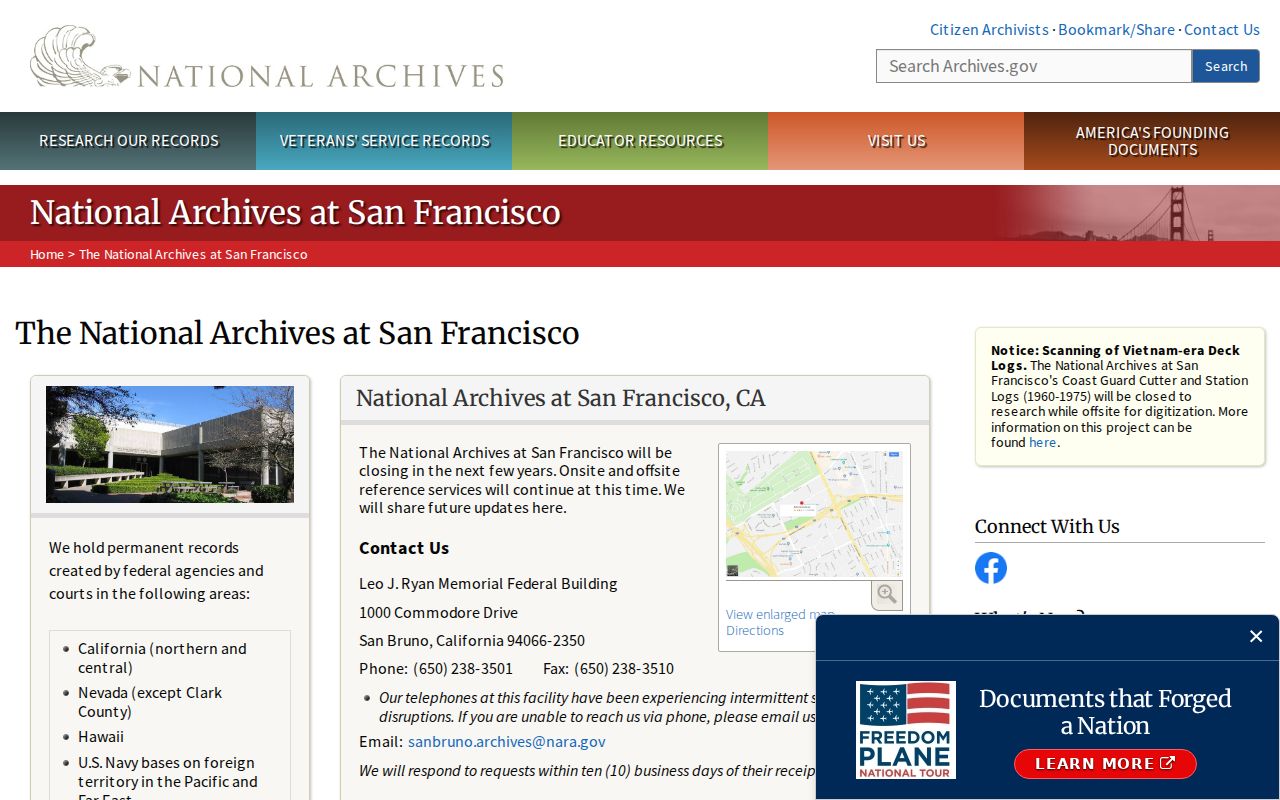
Federal census and migration sources can supply the decade-level context around a Manteca directory entry.
California's State Archives and its family-history resources are another fallback when a county portal lacks an older index.
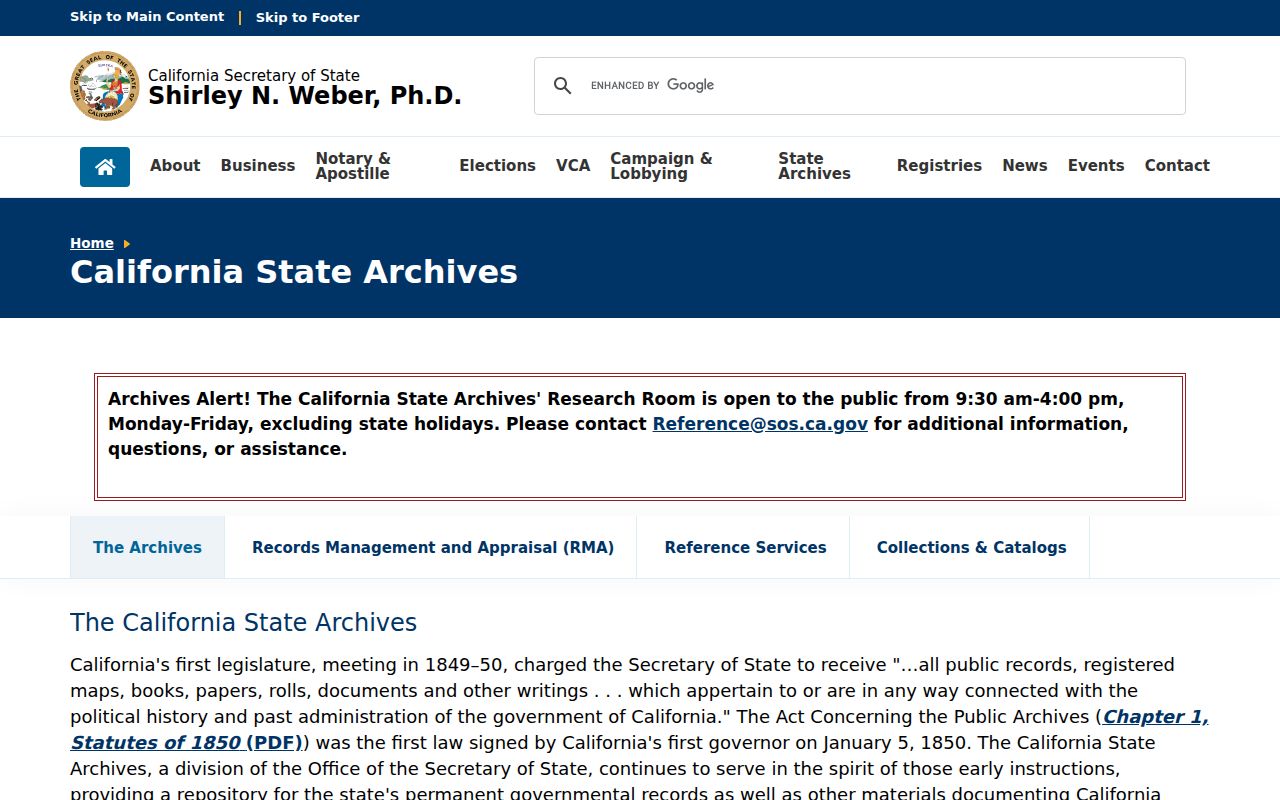
The archives route helps place county, government, and family-history material outside the ordinary library shelf.
The city directory shelf is strongest when a catalog, archive, and local-history source are compared rather than treated as interchangeable.
Manteca Directory Unclaimed-Property Clues
Unclaimed property is not a city directory, but the California State Controller search can sometimes provide a name, reported address clue, property ID, and reporting-holder context for a family-history lead. The search requires a last or business name or a property ID. First name, city, and ZIP are optional. Exact matches appear before similar names, and the claim process requires proof.
The search and claim are free. Claims of at least $1,000 and all securities or safe-deposit claims require notarization. Treat a result as a lead only. It does not prove that a person lived at the reported address during a particular year, and the claim process is separate from a deed, vital record, or directory.
Open the State Controller unclaimed-property search when a missing relative or old address has a matching name clue.
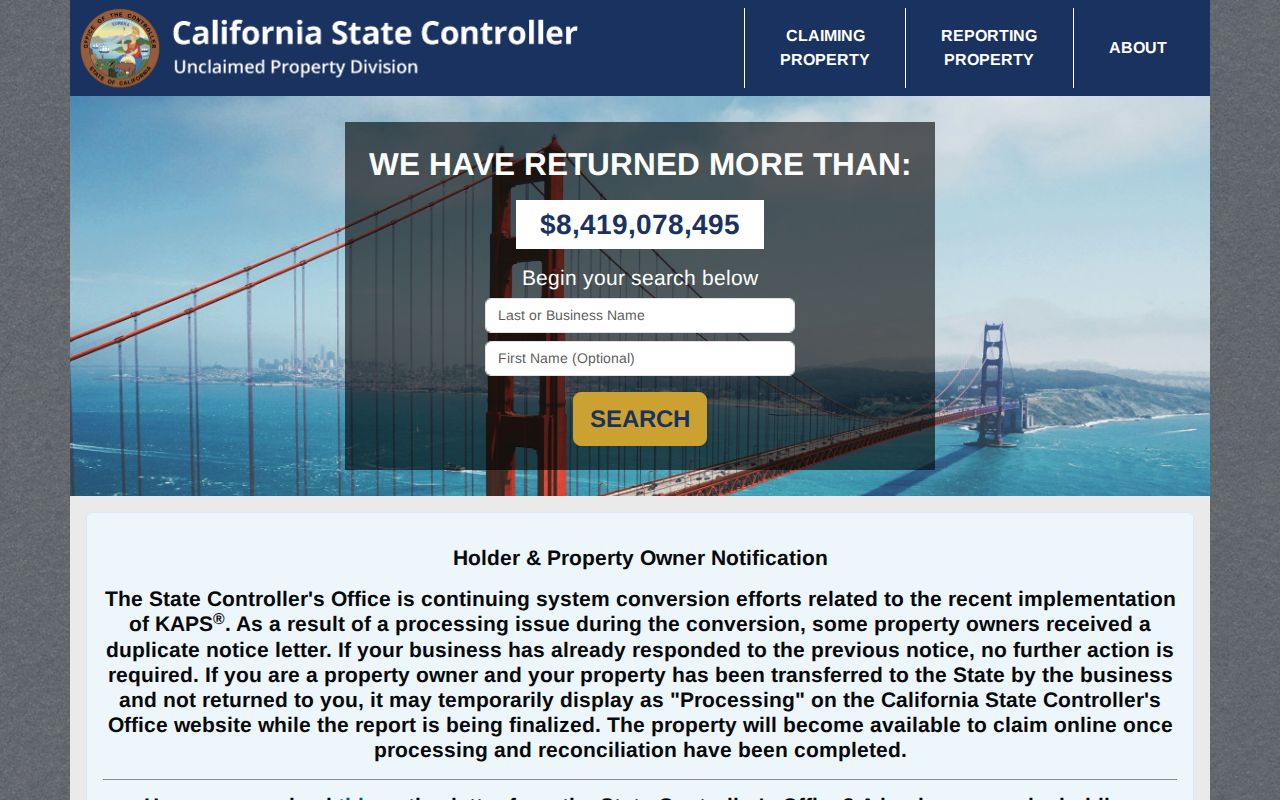
The result screen belongs at the edge of a directory workflow, where it can suggest a next record to verify.
Federal Dockets Near a Manteca Directory Trail
Some family, business, or property stories cross into federal court. San Joaquin County falls within the Eastern District of California. PACER searches federal dockets by party or case number after account registration. A docket can show filings and parties, but document access follows the current federal fee schedule and may be subject to a quarterly waiver threshold or an exemption.
A PACER hit is not a substitute for a Manteca city directory. It is a dated legal record that can help explain a name, an entity, or an address clue. Capture the court, case number, caption, party role, filing date, docket event, and document availability. Compare it with a county deed, business filing, or newspaper before drawing a family-history conclusion.
Open the Eastern District of California for court coverage and local filing information.
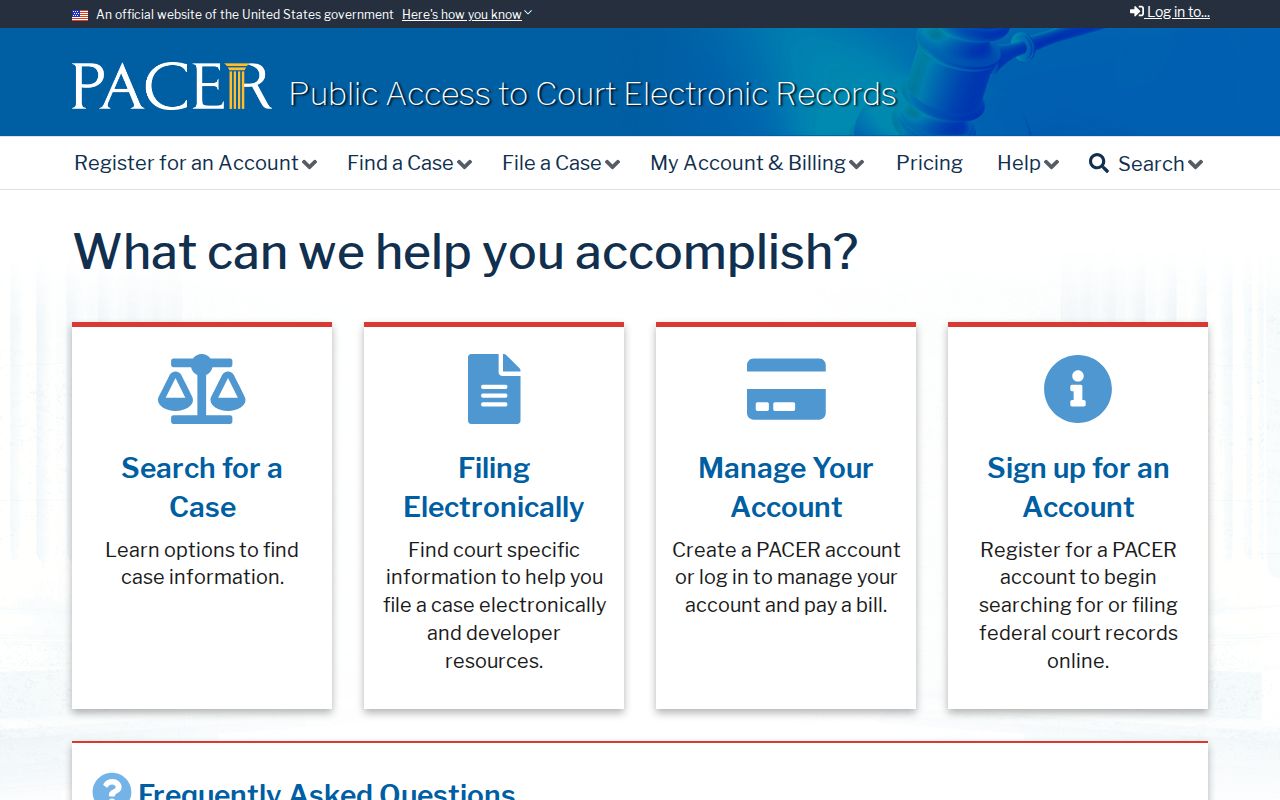
The federal docket screen is a separate research lane that can add dates and party roles around a historical address story.
Tracing a Household Through Manteca City Directories
Use the nearest verified years instead of waiting for a perfect annual run. A directory entry is a snapshot. A census is an enumeration-date snapshot. A deed is a recorded transfer. An obituary or probate record can explain a disappearance. Together they create a timeline that is more reliable than any one Manteca city directory.
- Write the person's name exactly as printed, including initials, spouse notation, occupation, address, and the volume's abbreviation key.
- Search the next available year and record whether the address, spouse, work clue, or householder mark changed.
- Flip to the reverse or criss-cross section to test the street and number, then note nearby entries without treating proximity as kinship.
- Pair the directory years with federal census schedules through 1950, whose local geography can change from one decade to the next.
- Use newspapers, obituaries, probate, cemetery, or vital records to test whether a move, death, marriage, or name change explains a gap.
A person disappearing from one volume may have moved, died, changed a name, fallen outside the publisher's coverage, or simply gone unlisted. The next record should answer which explanation is plausible. A missing directory year cannot do that work alone.
When a directory clue needs a current record, the Manteca resident lookup page supplies a separate name-verification path.
Manteca Directory Gaps and Local News
Local newspapers can bridge the space between the verified directory years. The Manteca Bulletin and regional San Joaquin outlets may carry obituaries, marriage announcements, school and club news, legal notices, and address context. Search compound surnames, married names, initials, and Spanish naming conventions carefully. A newspaper is a clue until a custodian record supports the fact.
School yearbooks and alumni publications can reconnect classmates and establish a chronology. Organization and employer names such as Southern Pacific, Spreckels, Kraft, Sharpe Army Depot, the Chamber, Rotary, or the Historical Society can lead to photographs, newsletters, and public meeting records. They are not open household rosters. Use the exact name as a catalog or newspaper keyword.
The result is a layered Manteca city directory method: verified directory entry, street section, census, newspaper, deed or permit, then a family or vital record where eligibility allows. It respects the gaps instead of filling them with an invented continuous story.